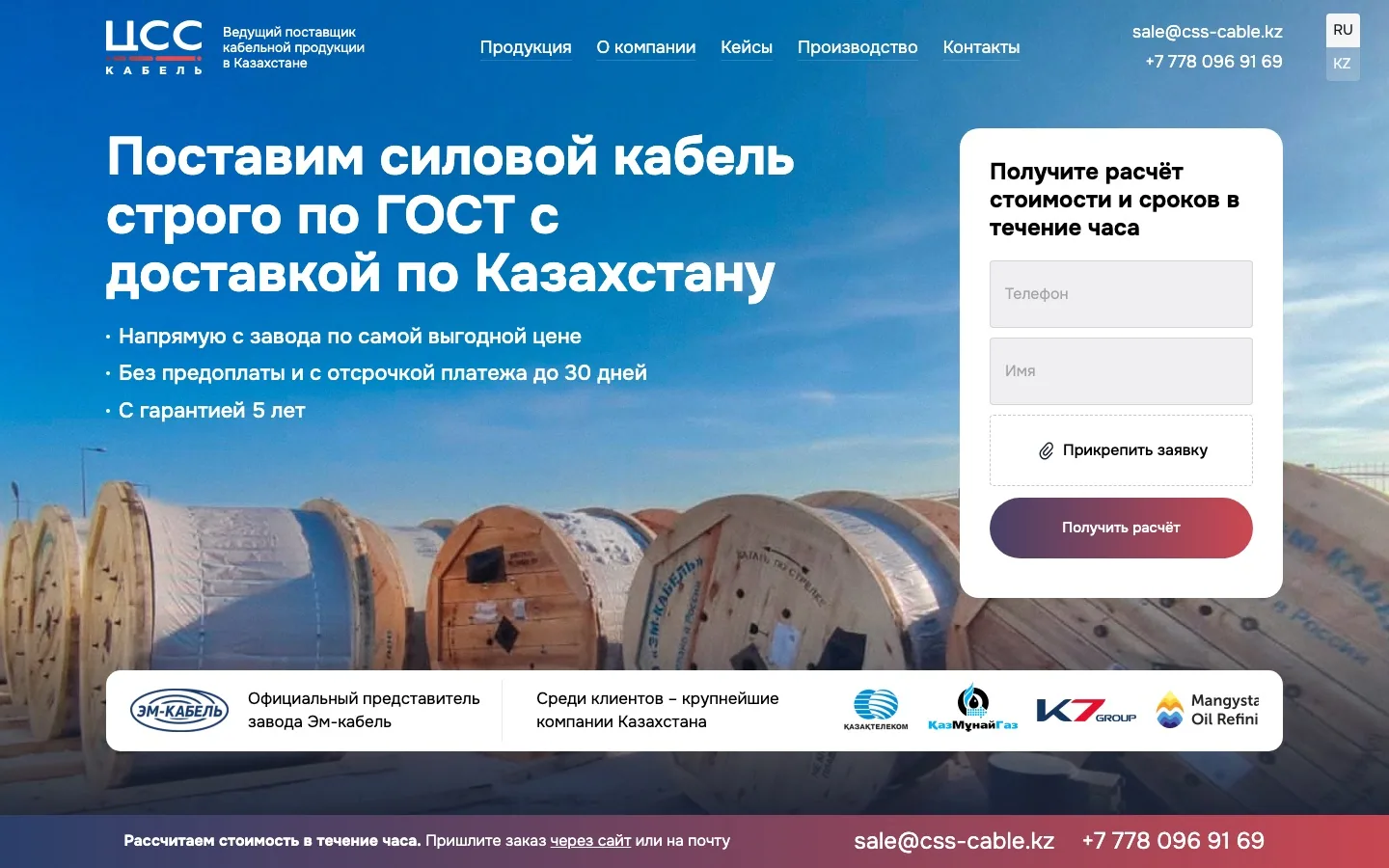
CSS Cable came to us with advertising that already worked — a rare starting point. We usually start from scratch. Here, paid search was already generating enquiries. The problem was connecting a specific ad click to a specific deal. The ads were running, but they were not learning.
Without CRM, the algorithms received just one signal: “enquiry submitted”. They did not know whether the person became a customer, the contract value or which cable category was ordered. With 10,000 SKUs, this matters: one category can bring contracts worth millions, while another brings small orders that do not cover the advertising costs.
Bitrix24 implementation
We implemented Bitrix24 with a complete pipeline, from lead to closing documents. The tender department has its own pipeline and processes: classification, deadlines and documentation. Previously, tenders were managed in Excel, with all the problems that entails.
Accounting and legal teams also use the system. Tasks between departments pass through Bitrix rather than message threads.
The main value of CRM: data for advertising
The main value of CRM in this project is the data it supplies to advertising, rather than the sales pipeline itself.
Every lead is marked as qualified or unqualified. This data goes back to Google Ads and Yandex Direct. The algorithms learn which click brought a real buyer and which brought a casual visitor. A 6 kV power cable enquiry turned into a contract worth millions — the algorithm remembers. A PVS wire enquiry became an order worth 30 thousand — it remembers that too. It then starts allocating the budget differently.
This connection delivered CPC of 8 tenge on Yandex banners and conversions at around $3 in the KVVG search campaign. Without CRM, these figures would have been impossible: the algorithms would have optimised for enquiry volume rather than revenue.
If your advertising generates enquiries but you do not know which ones turn into revenue, get in touch. We’ll work out what connecting CRM and analytics can do for your business.